

What Are Fluorescent Nanodiamonds?
Oct 20, 2026
Leave a message
What are fluorescent nanodiamonds?
Fluorescent nanodiamonds (FNDs) are nanodiamond materials-ranging in size from a few nanometers to several hundred nanometers-that possess the ability to emit fluorescence due to the introduction of optically active "color center" defects into their diamond crystal lattice. Their two primary applications are bioimaging and quantum sensing.
What makes them truly unique is their ability to "emit light without being degraded by light exposure." Unlike conventional organic dyes or quantum dots, which fade (or "photobleach") under intense illumination, the color centers within diamonds are exceptionally stable. Furthermore, because they exhibit extremely low cytotoxicity, they are ideally suited for long-term, high-fidelity biological labeling and cell tracking.
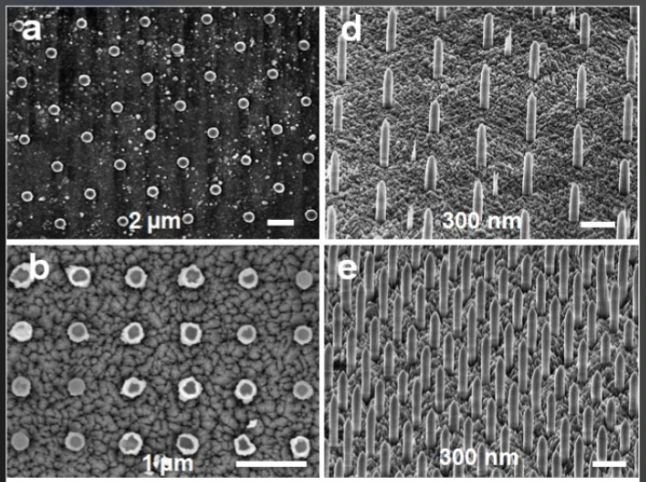
1 Where Does the Fluorescence Come From? Light Emission via "Color Centers"
Diamond, in its pure form, is a carbon crystal lattice that does not emit light. The fluorescence in FNDs (fluorescent nanodiamonds) originates from "color centers"-atomic-scale defects-within the lattice. The most common and extensively studied type is the NV (nitrogen-vacancy) center: a nitrogen atom replaces a carbon atom, accompanied by an adjacent vacancy. This pair emits red light when excited by green light (with a zero-phonon line at approximately 637 nm and a spectral range spanning roughly 600–800 nm). Beyond NV centers, there are others, such as silicon-vacancy (SiV) and germanium-vacancy (GeV) centers, which emit near-infrared light-making them particularly well-suited for imaging deep within biological tissues.
These color centers are typically introduced in one of two ways: either by incorporating nitrogen impurities during high-pressure, high-temperature (HPHT) synthesis-followed by irradiation and annealing-or by subjecting nanodiamonds to ion implantation and subsequent heat treatment. Since a single nanodiamond can contain multiple NV centers, FNDs function simultaneously as fluorescent probes and atomic-scale quantum sensors.
2.Why It Outperforms Dyes and Quantum Dots
- Resistance to Photobleaching: Embedded within the rigid crystal lattice of diamond, color centers do not fade even under prolonged, intense illumination, allowing for continuous imaging over hours or even days.
- Excellent Biocompatibility: Diamond is chemically inert and non-toxic; once its surface is functionalized with groups such as carboxyl, amino, or PEG, it can be introduced directly into cells.
- High Fluorescence Brightness and Broad Spectral Range: It emits in the red/near-infrared region and exhibits low background autofluorescence.
- Multifunctionality and Extensibility: A single fluorescent nanodiamond (FND) can serve both as a probe for fluorescence imaging and as a nanoscale sensor for magnetic fields, temperature, or electric fields.
3. Application Areas: From Biological Labeling to Quantum Sensing
- 1. Bioimaging and Cell Tracking: Fluorescent nanodiamonds (FNDs) are widely used for long-term cell labeling, stem cell tracking, and the study of tumor metastasis pathways. Because they do not photobleach, they allow for the continuous tracking of cell migration in vivo over several weeks-a feat impossible with organic dyes. When combined with super-resolution imaging techniques (such as STED, PALM, or STORM), FNDs can even enable imaging at the single-molecule resolution level.
- 2. Drug Delivery and Theranostics: The surface of nanodiamonds can be loaded with drugs-such as doxorubicin or cisplatin-to form nanodiamond-polymer complexes, which facilitate the sustained release of the therapeutic agents. Simultaneously, the fluorescence of the FNDs can be used to track the distribution of these drugs, creating what is known as a "theranostic" (therapeutic + diagnostic) platform.
- 3. Quantum Sensing: The "Superpowers" of NV Centers: Nitrogen-vacancy (NV) centers are highly sensitive to magnetic fields, temperature, and electric fields, making them one of the most prominent solid-state quantum sensing platforms today.
-
Key applications include:
Neuromagnetic Imaging:Using FNDs to measure the faint magnetic fields generated by neuronal firing, allowing for the detection of brain signals without the need for physical electrodes.
Intracellular Thermometry: Once inside living cells, nanodiamonds can measure local temperatures in real time, facilitating the study of cellular metabolism.
Semiconductor Defect Detection:Utilizing NV-based magnetic microscopy to detect internal currents and defects within semiconductor chips. - 4. Anti-Counterfeiting and Security: The unique fluorescence spectra of FNDs can serve as highly secure anti-counterfeiting markers for items such as banknotes, luxury goods, and identification documents.
4. Development History: From Laboratory to Commercialization
- 1960s–1980s: NV centers were discovered in bulk diamond; research was primarily conducted in solid-state physics laboratories, with applications in spectroscopy..
- 1990s: Large-scale production of detonation nanodiamonds was achieved, establishing the material foundation for fluorescent nanodiamonds (FNDs).
- 2005–2008: Research teams, including those at Yale University, pioneered the use of NV-center-containing nanodiamonds as biological fluorescent probes, demonstrating their photostability and low toxicity in living cells.
- 2008–2015: The field of NV-center-based quantum sensing experienced a surge in activity; research groups at institutions such as Harvard University, the University of Stuttgart, and the University of Kaiserslautern demonstrated applications including nanoscale magnetometry and single-cell thermometry.
- 2015–Present: FNDs have become commercially available; quantum sensing technologies are advancing toward industrial prototypes, and biomedical applications have entered the stage of preclinical research..
Taking the hard blade as an example: the precision-finished aluminum hub is loaded into a mold and given an electroplating pre-treatment - degreasing, oxide removal, acid pickling and aluminum activation. It is then electroformed in an electrolyte mixed with diamond grit; nickel ions deposit onto the hub surface, locking the diamond grains layer by layer inside the nickel coating until a complete ultra-thin diamond wheel is built up.
5. Future Outlook
As FND (fluorescent nanodiamond) fabrication processes advance, several key areas warrant attention: First, the development of sub-10 nm, single-NV-center ultra-small FNDs to further minimize intracellular interference and enhance quantum sensing sensitivity. Second, the standardization of surface chemistry to ensure batch-to-batch consistency and facilitate clinical translation. Third, the commercialization of quantum sensing, particularly in fields such as semiconductor inspection, neuroscience, and portable magnetic resonance imaging (micro-MRI). Fourth, the creation of multimodal diagnostic and therapeutic platforms through the integration of FNDs with other nanomaterials (e.g., quantum dots or magnetic nanoparticles).
It is foreseeable that FNDs will evolve from a "niche laboratory material" toward the intersection of two trillion-dollar markets: biomedicine and quantum sensing.
About huicetools: Huicetools is a specialized manufacturer of diamond tools. Established in 2006, the company offers extensive industry experience, direct-from-factory sales, and excellent value for money. Its core product range includes diamond segment, diamond ring saw blade, diamond wall saw blade, diamond wire saw, diamond grinding shoes, diamond cup grinding grinding wheel, diamond saw blades, diamond grinding segments, Diamond Grinding & Polishing Pad/Disc and drill bits designed for Stone Processing & construction and engineering applications.
Disclaimer: This article is compiled and adapted from publicly available information on the Chinese internet and general industry knowledge; it is intended solely for professional exchange and reference. The technical parameters, application areas, and development stages mentioned herein are for educational purposes only; actual performance may vary based on fabrication methods and specific application conditions. The company makes no guarantees regarding the completeness, accuracy, or timeliness of this information, and it should not be construed as advice for investment or procurement decisions. For reproduction or citation, please contact Huicetools and cite the original source.
Send Inquiry