

The Role of Tin Powder in Diamond Tools
Aug 02, 2026
Leave a message
The Role of Tin Powder in Diamond Metal-Bond Tools
Tin powder (Sn) is a commonly used low-temperature liquid-phase modifying component in diamond tool matrices. It is widely added to formulations based on Fe-Cu or Fe-Cu-Co systems. Leveraging its low melting point to facilitate liquid-phase sintering, it is extensively used in products such as stone-cutting segments, wet polishing pads, and geological drill bits.
1. Core Functions
1) Lowering sintering temperature and protecting diamonds
With a melting point of only 231.9°C, tin melts early during the sintering process to form a liquid phase. Through the mechanism of liquid-phase sintering, it promotes the rearrangement and mutual diffusion of iron and copper powder particles. This significantly lowers the overall sintering temperature of the matrix (often to 700–800°C), preventing diamond graphitization and strength degradation caused by high temperatures; thus, it serves as a crucial "sintering aid" in the formulation.
2) Increasing matrix density and filling internal voids
Molten tin flows via capillary action to fill the gaps between matrix powder particles, reducing internal porosity. This enhances matrix density and flexural strength while minimizing the risk of internal cracks and material loss (chipping).
3) Improving wettability and strengthening mechanical diamond retention
Tin reduces the surface tension of the molten alloy, improving the wetting of the diamond surface by the bond material. While tin does not chemically react with diamond to form carbides, the liquid tin forms an alloy with Cu and Fe that tightly encapsulates the diamond particles. This enhances mechanical retention, thereby reducing premature diamond loss during operation.
4) Adjusting matrix mechanical properties and optimizing self-sharpening characteristics
An appropriate amount of tin allows for the fine-tuning of matrix hardness and wear resistance. By controlling the matrix wear rate to synchronize with diamond wear, it ensures the continuous, effective exposure of diamond cutting edges, thereby enhancing the tool's sharpness. In iron-based formulations, tin refines alloy grains and balances the matrix's toughness and brittleness. Improving Powder
5) Molding Processability
Optimizes the pressing performance of powder mixtures and increases the strength of cold-pressed compacts; reduces breakage during demolding and handling; and ensures compatibility with cold-press sintering production processes.
2. Limitations of Tin Powder
(Key Formulation Considerations)
1) Sensitivity to dosage; excess leads to brittleness
Excessive tin increases matrix brittleness, making segments prone to edge chipping under impact conditions; typical formulations keep the addition level within the 2%–8% range.
2) Prone to flowing and "run-off" defects at high temperatures
Excessive sintering temperatures or holding times can cause liquid tin to seep or segregate, resulting in surface run-off on the segment and compositional non-uniformity.
3)High coefficient of thermal expansion
Significant volume changes occur during cooling; improper proportions can generate internal stress and induce micro-cracks.
4) Susceptibility to oxidation
Ultrafine tin powder oxidizes rapidly upon contact with air; oxidized tin loses its liquid-phase function, directly reducing sintered density, so raw materials must be stored in sealed containers.
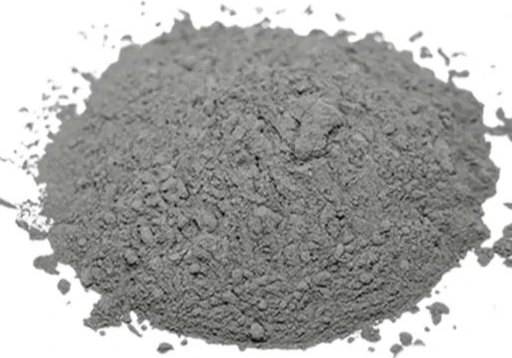
(Tin Powder/Sn)
3. Application References and Formulation Logic
- Stone-cutting saw blades, gang saw segments, and wet grinding blocks: Iron-copper systems combined with tin powder balance cutting sharpness and wear resistance;
- Engineering drill bits subject to high impact loads: Strictly control tin content to prevent excessive matrix brittleness;
- Alternative production options: Zinc powder also lowers sintering temperatures, but copper-tin alloy matrices offer superior hardness and wear resistance compared to copper-zinc systems, making them better suited for processing granite and hard stone.
Send Inquiry