

What is a Polycrystalline Diamond Compact (PDC)?
Jul 09, 2026
Leave a message
What is a Polycrystalline Diamond Compact (PDC)?
The impact resistance, weldability, and adhesion to the metal bond matrix of diamond sintered bodies are poor. Therefore, people have thought of composite materials with high toughness and weldability on top of the diamond sintered body, which forms Polycrystalline Diamond Compact with better performance and wider applications.
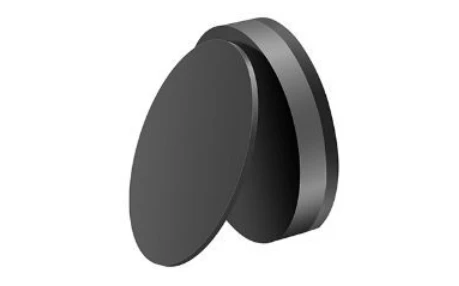
(Polycrystalline Diamond Compacts)
A Comprehensive Introduction to Polycrystalline Diamond Compacts (PDC)
I. Basic Definition and Origins
1. Full Name and Abbreviation
- Polycrystalline Diamond Compact (PDC).
2. R&D Motivation
Sintered polycrystalline diamond blocks (without a substrate) suffer from three fatal flaws:
- Poor impact resistance: prone to fracturing under stress;
- Poor weldability: difficult to weld onto drill bit or cutting tool bodies;
- Low bond strength with metal-matrix bodies: prone to detachment and failure during use.
Solution:
A high-toughness cemented carbide substrate is bonded to the bottom of the sintered diamond layer and formed as a single unit under high temperature and high pressure. This combines the ultra-high hardness and cutting capability of diamond with the toughness and weldability of cemented carbide, resulting in the PDC.
II. Structure and Dimensional Parameters
The unit features an integrated, two-layer composite structure sintered under ultra-high pressure and high temperature:
Top Layer:
Polycrystalline Diamond Cutting Layer
- Composed of fine-grained synthetic diamond powder and a small amount of specialized binder, sintered into a dense, solid mass under ultra-high pressure and high temperature; standard thickness: 0.5–1.5 mm.
- Characteristics: Free from the anisotropic defects found in single-crystal diamond; hardness and wear resistance are uniform in all directions; offers exceptional wear resistance and cutting capability.
Bottom Layer:
Cemented Carbide Substrate (Base Layer)
- Material: Tungsten-cobalt cemented carbide; thickness: 1–10 mm; metallurgically bonded to the diamond layer to form an integrated whole.
- Function: Provides high toughness and impact resistance; facilitates attachment to steel tool bodies or drill bits via laser or high-frequency welding; and is perfectly suited for composite molding with various metal-matrix bodies.
III. Core Performance Advantages
(Compared to Polycrystalline Diamond Compacts/Sintered Diamond Bodies)
1 Isotropic properties with high machining stability
- Unlike ordinary single-crystal diamond, which exhibits significant hardness variations across different crystal planes-leading to rapid localized wear-the PDC polycrystalline layer features randomly interlocked grains. This ensures uniform wear resistance and cutting performance in any direction, resulting in consistent grinding and drilling patterns.
2 Significantly enhanced impact resistance
- The cemented carbide base absorbs impact loads, preventing chipping or fracturing when machining rebar, hard rock, or concrete, making it suitable for heavy-duty, high-impact applications.
3 Excellent weldability
- The cemented carbide substrate can be directly welded to steel pipes, tool bodies, or cutter heads without damaging the diamond surface, resulting in high yields during the manufacture of drill bits and forming tools.
4 Good compatibility with metal binders
- Can be directly embedded into metal matrices during sintering for a secure bond, eliminating the delamination or grain-shedding issues often found in pure sintered diamond bodies.
5 Combines the ultra-high wear resistance and hardness of diamond with the toughness of cemented carbide, balancing cutting sharpness with long service life.
IV. Mainstream Application Areas
1 Oil & Gas / Geological Drilling PDC Bits
- The primary application involves embedding numerous PDC composite cutters to drill through granite, hard rock formations, and sandstone; offers superior wear resistance, fast penetration rates, and a lifespan far exceeding that of standard cemented carbide teeth.
2 Concrete / Stone Diamond Drill Bits & Segments
- PDC composite cutters are embedded into core bits and engineering drill teeth specifically for cutting rebar, high-strength concrete, and granite aggregates; provides impact resistance and prevents thermal degradation (burning) of the cutting teeth.
3 Precision Cutting Tools
- Turning and milling tools for precision machining of non-ferrous metals, graphite, ceramics, and stone; delivers high-quality surface finishes without burrs and offers an exceptionally long service life.
4 Diamond Dressing Tools
- Used for dressing grinding wheels and sintered diamond abrasive blocks; serves as a cost-effective alternative to natural single-crystal diamond.
5 Wire Drawing Dies and Wear-Resistant Forming Molds
- Leverages ultra-high wear resistance for metal wire drawing and forming applications.

V. Brief Overview of the Manufacturing Process
Utilizes a high-pressure, high-temperature (HPHT) sintering process with a cubic press:
- Fine diamond powder, a binder, and a cemented carbide substrate are stacked and sintered together in a single step under conditions exceeding 1,500°C and pressures of several gigapascals (GPa). This creates a metallurgical bond at the interface, ensuring the layers cannot delaminate or separate. The finished product can be cut and ground into various shapes, such as discs, segments, or strips.
VI. Comparison: PDC Compacts vs. Conventional Electroplated/Brazed/Sintered Diamond Tools
- Conventional diamond tools: Diamond particles are dispersed within a metal or resin matrix, relying on the matrix for encapsulation and retention.
- PDC compacts: Feature an integrally formed, continuous polycrystalline diamond layer. They offer significantly higher wear resistance and density, making them suitable for heavy-duty, high-hardness, and high-impact applications.
- Cost difference: PDC compacts have a higher unit cost and are primarily used for high-end engineering drilling, heavy-duty cutting, and high-load concrete processing; they are rarely used in standard stone processing line polishing blocks.
Send Inquiry