

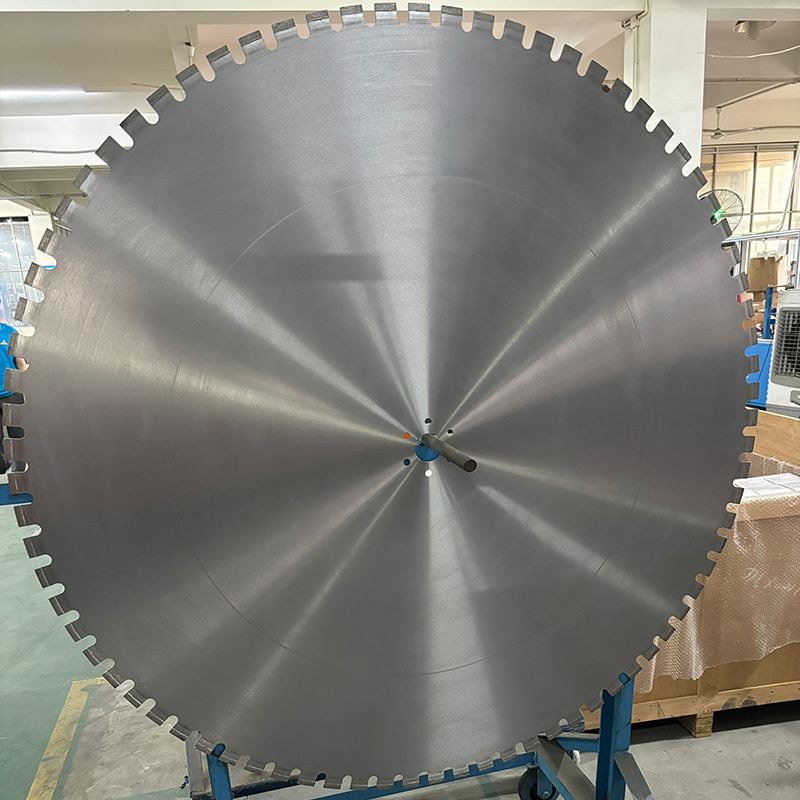
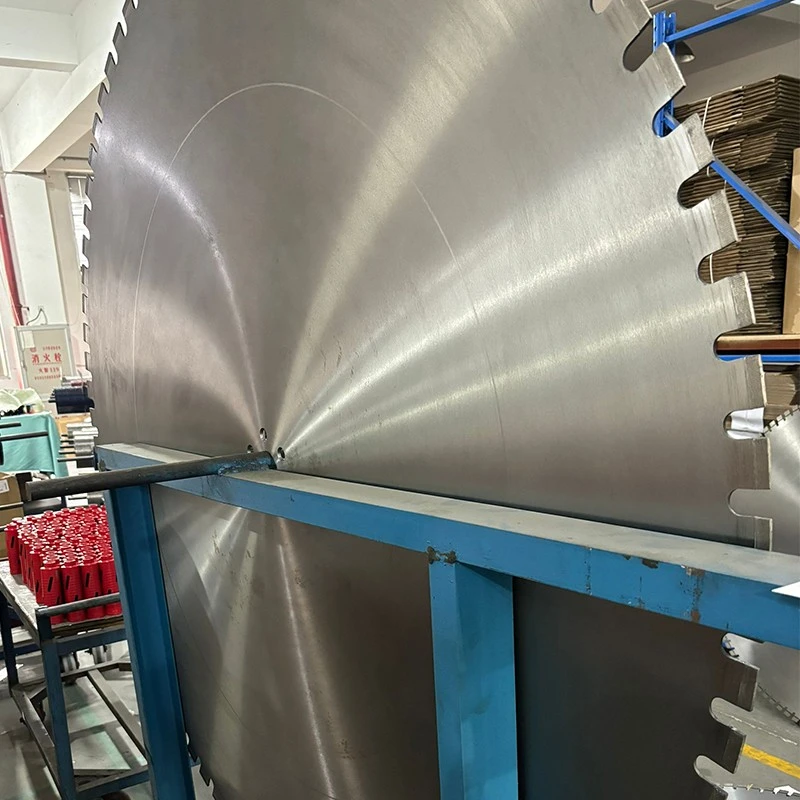
1600mm Laser Diamond Wall Saw Blade With Arix Segment
Huicetools manufactures high-quality 1600 laser-welded diamond heavy-duty saw blades. We offer reliable quality, competitive pricing and rich manufacturing experience, with products exported to many countries worldwide.
Huicetools · Diamond wall saw blades
1600 mm (62") diamond wall saw blade
A heavy-duty wall saw blade for 600–800 mm high-strength, densely reinforced concrete - built to cut the wall through in a single pass from one side, where the far side is soil, water or an existing structure and nothing can be set up behind it.

1600 mm segmented diamond wall saw blade - send us the wall thickness and access condition for a blade recommendation.
Why 1600 mm
One pass through walls other blades cannot finish
A 1600 mm blade is not chosen for speed on thin walls. It is chosen when the wall is thicker than the blade can reach - 600 mm and above - and when the cut has to be completed from the working face only.
Typical 800–1200 mm blades reach an effective depth of 350–550 mm. On a 700 mm diaphragm wall, that means double-sided cutting: twice the set-up, two kerfs to align, and a stepped joint if the two passes do not meet cleanly. At 1600 mm the blade reaches 750 mm and the wall is cut through in one travel.
| Blade diameter | Effective cutting depth | Typical use |
|---|---|---|
| 800–1200 mm | 350–550 mm | Walls up to ~500 mm, or two-sided cutting on thicker sections |
| 1600 mm (62") | 750 mm | 600–800 mm walls, single-side cutting, one pass |
Effective depth values are typical and depend on blade guard, machine and flange. Confirm the combination with our engineers before specifying.
Cut through ultra-thick structures once
600–800 mm walls, pier caps and thick slabs are finished in a single travel. No second set-up on the far side, no misaligned kerf, no patch-up at the joint.
Work from one side only
Diaphragm walls with soil behind, levee walls against water, support walls tight to an existing building, walls with buried services - no space to drill through or mount guide equipment. The blade cuts from the working face alone.
Fewer moves on heavy projects
A larger bite per pass means fewer rig repositionings, fewer re-alignments and less machine idle time. On large-volume demolition the saving shows up in days on site, not just metres of kerf.

Recommended: blade mounted on the machine, cutting a thick wall, or a straight-on product shot.
Applications
Where a 1600 mm blade is the only practical option
Heavy infrastructure and special projects where the structure is over 600 mm thick and cannot be worked from both sides.
Deep excavation & underground support
Partial removal of diaphragm walls, cropping and windowing of secant or bored piles, and cutting of strut beams inside the pit - high-strength concrete with dense reinforcement.
Municipal & underground space
Openings in utility tunnel side walls and roof slabs, thick metro station walls and air-duct walls, box culvert and civil-defence refurbishment - where structural damage must stay minimal.
Water conservancy & special infrastructure
Dam bodies, spillways and flood levees, expansion-joint work, nuclear and substation protective walls, and the thick walls of large wastewater tanks.
Bridges & large-section members
Sectioning of large piers and pile caps, removal of bridge crash barriers, and static demolition of large-section beams and columns beyond 600 mm.
Single-side restricted sites
Soil, water, an existing building or buried services behind the wall - no room for equipment and no way to drill a through-hole. One-sided deep cutting is the only option.
Structural openings & upgrades
Door and window openings, wall sectioning and structural strengthening interfaces that need a flat, square cut ready for the next trade without grinding or patching.
Rule of thumb: if the wall is under 500 mm, an 800–1200 mm blade is cheaper and faster. If it is over 600 mm and only one face is accessible, specify 1600 mm.
Build quality
Designed for the loads a 1600 mm blade actually carries

A sharp, well-lit macro shot of the segment rim sells this blade better than any copy.
-
75Cr1 /30CrMo / 50Mn2V steel body
High fatigue strength for continuous heavy cutting and repeated impact. The body resists fatigue cracking through long shifts - the failure mode that ends most large-blade life early.
-
HSD90/95 single-crystal diamond
High impact and thermal-shock resistance. The grit holds its edge against rebar and hard aggregate instead of fracturing, so the blade stays sharp in steel-heavy, high-grade concrete.
-
Arix ordered diamond arrangement
Diamonds are positioned in a controlled pattern rather than randomly scattered, so every segment works evenly - smooth, stable cutting and long life on high-grade and steel-heavy concrete.
-
Side gauge keeping - no "trumpet" kerf
Radial wear stays uniform and the segment sides hold their gauge in deep cuts, so the kerf does not widen into a trumpet shape and jam the blade mid-cut.
-
No chipped or broken segments
On a 1600 mm blade the contact arc is long and impact loads are severe. High-toughness segments avoid tooth breakage and diamond pull-out - the main cause of flying debris and downtime.
Specifications
Technical data
Standard supply and custom options. Segment size is the variable that matters most - tell us your cutting plan and we will match it.
| Parameter | Specification |
|---|---|
| Product | 1600 mm (62") diamond wall saw blade |
| Blade diameter | 1600 mm / 62 inch |
| Maximum cutting depth | 750 mm |
| Body material | 50Mn high-strength vanadium-alloy manganese steel |
| Diamond | HSD90/95 single-crystal diamond grit |
| Segment arrangement | Arix ordered diamond arrangement |
| Standard segment | 20 × 5.5 × 13.5 mm, rhombus (diamond) shape |
| Alternative segment | 40 × 5.5 × 12 mm |
| Custom segment | 40 × 4.4 × 12 mm - for two-stage cutting (see note below) |
| Compatible machines | Husqvarna, Hilti, Tyrolit and most imported and domestic hydraulic track wall saws; electric wall saws |
| Typical wall thickness | 600–800 mm, high-strength and densely reinforced concrete |
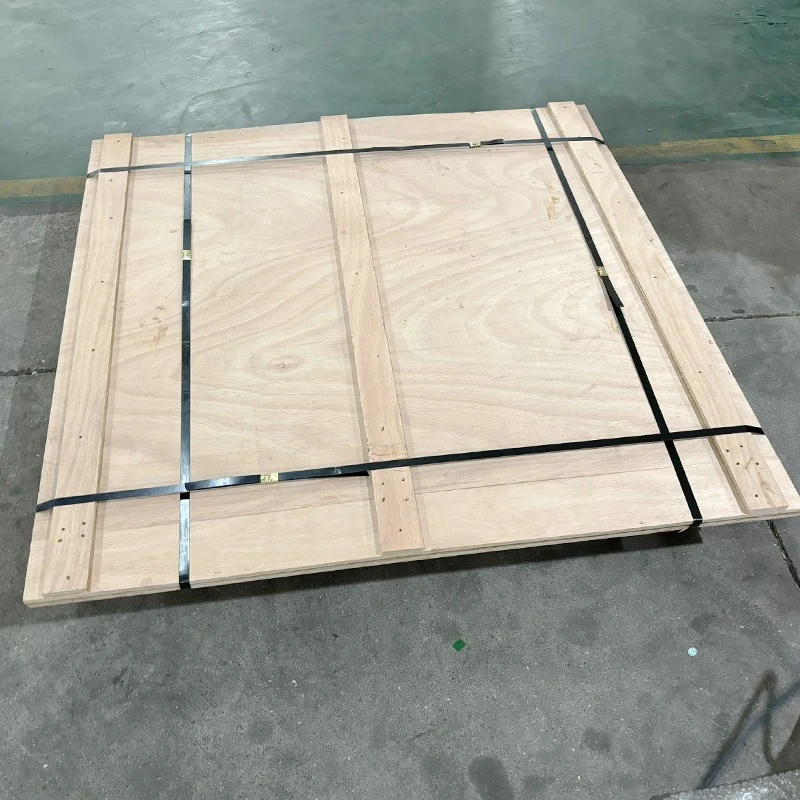
| Packing | Wooden case, 1650 × 1650 × 60 mm, approx. 0.16 CBM per blade |
Which segment size do you need?
| Segment | Type | Best for |
|---|---|---|
| 20 × 5.5 × 13.5 mm | Standard, rhombus | General 600–800 mm wall cutting; the everyday stock specification |
| 40 × 5.5 × 12 mm | Longer segment | More diamond exposure and longer wear life on abrasive, high-strength concrete |
| 40 × 4.4 × 12 mm | Custom, thinner | Two-stage cutting: an 800 mm blade opens the kerf, the 1600 mm blade follows through. The thinner segment keeps the second pass in the same kerf instead of widening it |
The 40 × 4.4 × 12 mm option exists because a customer cut the wall first with an 800 mm blade and then finished it with a 1600 mm blade. If your method is the same, say so when you order - otherwise the standard 20 × 5.5 × 13.5 or 40 × 5.5 × 12 mm segment is the right starting point.
Wall saw vs wire saw
Why a 1600 mm wall saw beats a wire saw on these jobs
Wire saws win on very large or irregular continuous demolition. On thick, regular, single-side walls, the wall saw is the better tool - for six concrete reasons.
Kerf accuracy and finished face
Works from one side, no through-holes
Set-up time on regular plane cuts
Damage to the retained structure
Site safety and control cost
Economics on small and medium volumes
Comparative guidance based on typical site conditions and standard practice. For a specific wall - thickness, reinforcement, access and finish requirement - send us the details and we will recommend the method as well as the blade.
Packing & shipping
Packed to survive the freight
A 1600 mm blade is a fragile, heavy item in transit. Each blade ships in its own wooden case, sized to the blade with clearance on all sides.
Tell us the shipping method and destination port when you order - we will confirm crate marking, stacking and any consolidation with your other items.

A packed case photo reassures first-time buyers more than a spec sheet.
FAQ
Buyer questions
750 mm. That is enough to cut 600–800 mm walls through in one pass from a single side, provided the blade guard and machine allow the full depth.
Yes, that is exactly what it is for. An 800–1200 mm blade reaches only 350–550 mm, so a 700 mm wall needs two passes and a joint that may step. At 1600 mm the cut is one travel, one kerf, no joint.
Husqvarna, Hilti, Tyrolit and most imported and domestic hydraulic track wall saws, as well as electric wall saws. Send your machine model and we will confirm the spindle, flange and guard before shipping.
The 20 × 5.5 × 13.5 mm rhombus segment is our standard stock specification and covers most 600–800 mm wall cutting. The 40 × 5.5 × 12 mm segment gives more diamond exposure and longer wear life on abrasive, high-strength concrete. Tell us the concrete grade and rebar density and we will recommend one.
For two-stage cutting. One customer opens the kerf with an 800 mm blade and then finishes with a 1600 mm blade; a thinner 4.4 mm segment keeps the second pass inside the existing kerf instead of widening it. If you cut the same way, tell us when ordering - otherwise take the standard or 40 × 5.5 × 12 mm segment.
For thick but regular walls and slabs with access from one face, the wall saw gives a straighter, cleaner, cheaper cut. For very large volumes, irregular shapes or continuous demolition where the rope loop can be threaded, the wire saw is the better tool. Send us thickness, reinforcement and access conditions and we will advise.
In a wooden case of 1650 × 1650 × 60 mm, about 0.16 CBM per blade. A custom steel frame is available for special requirements or repeated shipments.
Wet cutting. Water cools the segment, flushes slurry and controls dust - on a 1600 mm blade in high-strength concrete it also protects the diamond bond and the body.
About Huicetools
From Quanzhou, China - wall saw blades up to 1600 mm
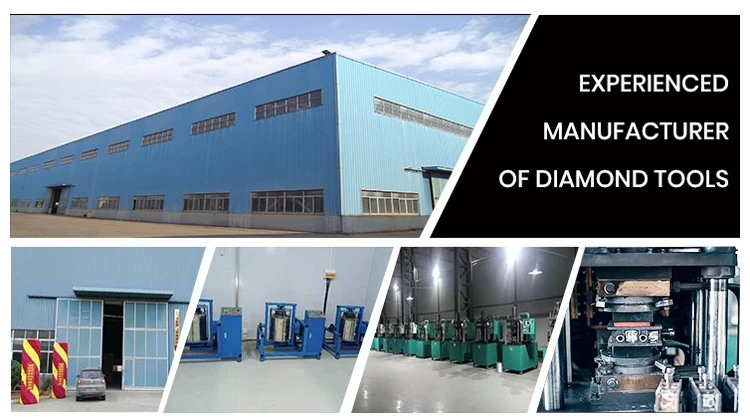
Founded in 2006 and based in Quanzhou, Fujian Province, Huicetools develops and manufactures diamond tools for concrete cutting, grinding and drilling. Our wall saw blade range runs from 800 mm to 1600 mm, with bodies rolled from 65Mn & 75Cr1 & 30CrMo & 50Mn2V steel and segments built on HSD90/95 single-crystal diamond.
We supply OEM blades to several internationally known brands and ship to markets across Europe and the Americas.
- ✓Wall saw blades 800–1600 mm
- ✓Arix ordered diamond segments
- ✓Custom segment sizes to your cutting method
- ✓OEM services available
Hot Tags: 1600mm laser diamond wall saw blade with arix segment, China 1600mm laser diamond wall saw blade with arix segment manufacturers
You Might Also Like


Send Inquiry