

Structural Design of High Frequency Welding Diamond Saw Blade segment
Feb 18, 2023
Leave a message
The segment of the segmental circular saw blade is commonly called the Diamond Segment, and this article also refers to it as the "diamond segment". Generally, the diamond segment is fan-shaped, the radius of the inner circle is equal to the outer diameter of the base, the radius of the outer circle is equal to the radius of the inner circle plus the height of the diamond segment, and the line connecting the two sides of the diamond segment to the center of the circle is fan-shaped; more designs are parallel to the center line two straight lines
Saw blades with a diameter of more than Φ1000mm generally have a simplified design in the shape of a rectangle, with no curvature inside and outside.
For example: the Φ1600mm saw blade diamond segment is designed as 24mm×15mm×9mm, the thickness of the substrate is 7mm, the blade is 1mm, and the number of each blade is 108.

1 multi-layer cutter head
A sandwich diamond segment
The sandwich diamond segment refers to a three-layer diamond segment with a sandwich in the middle. The interlayer can use the same powder formula, but the diamond concentration is low and the particles are large; it can also be designed as a softer powder formula. After cutting the rock for a period of time, the end face of the diamond segment will be grooved, making the saw blade work stably. , High cutting efficiency.
Example Φ350mm granite saw blade, blade size: 40mm×10mm×3.2mm, thickness on both sides 0.8, diamond concentration 30%, middle layer thickness 1.6mm, diamond concentration 12%.
Example Φ1600mm granite saw blade, the size of the blade is 24mm×12mm×9mm, the thickness of both sides is 2.5mm, the diamond concentration is 50%, the thickness of the middle layer is 4mm, and the diamond concentration is 25%.

B multi-layer diamond segment
Domestic consumption of Φ1600mm saw blades is the largest, and the competition among manufacturers is fierce. They try their best to reduce the cost as much as possible while ensuring a certain cutting performance and service life. Therefore, a multi-interlayer diamond segment structure is designed. Each diamond segment has 3 or 4 interlayers, with a thickness of 0.5~1mm. It is made of copper or iron (A3 steel plate punching), or it can be pressed with iron powder or the same part. Into pieces. This saves a lot of diamonds and powder, and this blade is widely used in the southern provinces.
2 trapezoidal diamond segment and stepped diamond segment
Viewed from the cross-section of the diamond segment, it is designed as a trapezoid with a large top and a small bottom or a stepped shape with a large top and a small bottom. See Figure 3-3. This structure mostly uses large-size saw blades. Due to the small contact area between the side of the diamond segment and the rock during the cutting work, the power consumption is small, the cutting effect is high, and the cutting substrate is not easily deformed. It is most suitable for cutting hard granite with large-sized saw blades above Φ2000mm. The trapezoidal diamond segment can also be designed into a multi-layer structure for better results.
Example: Φ2000mm saw blade diamond segment exported to Australia, the diamond segment size: 24mm×10mm/9mm×20mm, the thickness of the middle layer is 6mm, the sides are plus 2mm, and the bottom is 1.5mm
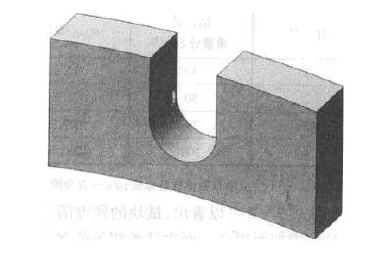
3 saddle shape diamond segment
This kind of diamond segment often appears in export orders, mostly used in saw blades with a diameter of about Φ800, and the cutting objects are marble and granite.
Although there is no comparative test, there are still some advantages from the structural analysis: due to the relative length of the cutter head, the contact area with the substrate is large, the welding is firm, and the teeth are not easy to drop; The exposure is good, and it is convenient for chip removal and cooling in time, so it is beneficial to improve the cutting efficiency. The disadvantage is that the graphite mold is complicated and increases the manufacturing cost.
Send Inquiry