

what is the Polycrystalline Diamond(PCD)?
Jul 09, 2025
Leave a message
Polycrystalline Diamond (PCD) is a new type of superhard material that has been studied and used internationally since the 1970s. It is sintered at a high temperature of 1400°C and a high pressure of 6GPa. This website will use an article to explain clearly what polycrystalline diamond is.
Polycrystalline diamond is both an engineering material and a new functional material; it is both a high-tech product and a high-efficiency product. With the development of modern industry and science and technology, polycrystalline diamond has been increasingly widely used in modern industry, national defense, and high-tech fields due to its excellent mechanical, thermal, chemical, acoustic, optical, and electrical properties.
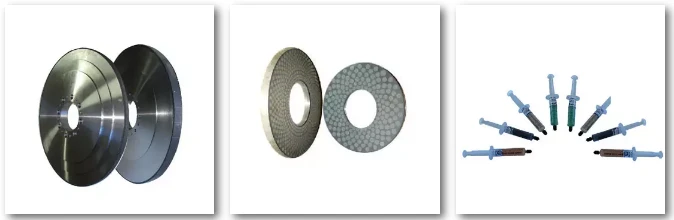
Polycrystalline diamond tools have become an indispensable means in modern cutting processing. This is mainly reflected in the following aspects:
- High-speed cutting, high-stability processing
- Ultra-precision mirror processing
- Dry cutting, clean processing
Performance Introduction
(1) High hardness and wear resistance
- The hardness of polycrystalline diamond is as high as about 10,000 HV, which is the hardest material in the world. It is much harder than cemented carbide and engineering ceramics. Because polycrystalline diamond is extremely hard and is isotropic, it has excellent wear resistance.
(2) Low friction coefficient
- The friction coefficient between polycrystalline diamond and some non-ferrous metals is lower than that of other materials, about 1/2 of that of cemented carbide. The low friction coefficient not only reduces deformation and cutting force, but also prevents the generation of built-up edge during cutting, thereby reducing the roughness of the machined surface.
(3) High thermal conductivity
- The thermal conductivity of polycrystalline diamond is very high, better than that of silver and copper, and much higher than that of general cemented carbide. Therefore, the cutting heat is easily dissipated during the cutting process, so the cutting temperature is relatively low.
(4) High machining accuracy
- Since polycrystalline diamond tools have a low thermal expansion coefficient and a high elastic modulus, they are not easily deformed during the cutting process. Under the action of cutting force, the tools can maintain their original parameters, remain sharp for a long time, and have high cutting accuracy. Therefore, when using PCD tools for processing, the cutting force and cutting temperature can be reduced, the tool durability and cutting rate can be improved, and a good machining surface can be obtained.
Main problem:
The high hardness and high wear resistance of PCD materials make molding and surface finishing very difficult, which seriously hinders its promotion and application.
Common processing methods:
EDM, laser processing, chemical processing, ultrasonic processing.
Ideal processing method:
grinding or lapping.
Processing technology introduction
Ⅰ Grinding(Polishing)
Due to the high hardness and wear resistance of polycrystalline diamond, its grinding mainly includes diamond wheel grinding, discharge grinding and electrolytic grinding. Among them, the simplest and most effective grinding method is diamond wheel grinding. In the actual processing process, different grinding methods can also be combined according to needs.
(1) Diamond wheel grinding
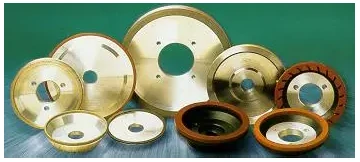
When diamond grinding wheels are used to grind polycrystalline diamond, the contact pressure and grinding force between the grinding wheel and the workpiece are relatively large, requiring the grinding system to have sufficient rigidity and high precision. In recent years, many countries have been developing and researching special grinding machines and grinding wheels for grinding polycrystalline diamond (including polycrystalline cubic boron nitride). For example, the CPG series of high-rigidity diamond tool precision grinders and the CP series of high-efficiency special diamond grinding wheels developed by Osaka Diamond Industry Co., Ltd. in Japan
(2) ELID mirror grinding of polycrystalline diamond
Online electrolytic dressing grinding wheel (ELID) precision mirror grinding technology is a new ultra-precision machining technology developed by Dr. Omori Masaru of the RIKEN Institute of Physical and Chemical Research in the late 1980s. Its basic principle is to continuously sharpen and dress the grinding wheel during the grinding process by utilizing the dynamic balance between the nonlinear electrolytic dressing effect and the electrolytic inhibition effect of the oxide insulating layer on the surface of the metal-bonded super-hard abrasive grinding wheel, so that the grinding wheel abrasive grains have a constant protrusion, so that the grinding wheel can always be continuously processed in the best grinding state. It is suitable for precision mirror grinding of hard and brittle materials.
Using metal-bonded diamond grinding wheels and ELID precision mirror grinding technology to process polycrystalline diamond can achieve good results. It is a new way to process polycrystalline diamond with great promotion value and application prospects.
(3) Electrospark grinding
The characteristics of the pulse generator are very important in the process of electrospark machining, especially for PCD materials. PCD has a certain conductivity, good thermal conductivity and a very high melting point. Therefore, traditional electrospark machining of polycrystalline diamond is very difficult.
The removal mechanism of electrospark grinding of PCD includes: diamond gasification, diamond oxidation, diamond conversion to graphite and amorphous carbon, the ejection force generated by the electrospark discharge, thermal stress on the diamond surface Microcracks and the fracture and crushing of diamond grains. Among them, the graphitization of diamond plays a key role in the process of electrospark polishing of diamond film. It not only plays a conductive role and maintains the existence of the discharge channel, so that the top of the protruding peak of the diamond film can be gasified, but also the graphitization-oxidation process of diamond is continuously carried out, thereby removing the diamond.
Electrospark machining and electrospark grinding of polycrystalline diamond are efficient and low-cost processing methods, but they cannot effectively process large areas of polycrystalline diamond.
Ⅱ Abrasive Grinding
There are three main methods for grinding polycrystalline diamond: one is to use a resin bonded fine-grained diamond wheel for precision grinding; the other is to use a hardened high-hardness steel disc (or agate disc) and directly grind without adding any abrasive; and the other is to use a high-speed rotating cast iron disc supplemented by diamond micropowder for grinding. Grinding can be used as a fine polishing process for polycrystalline diamond and is an important part of manufacturing polycrystalline diamond tools.
(1) Diamond grinding wheel grinding of polycrystalline diamond
Grinding of polycrystalline diamond with diamond grinding wheel is similar to grinding with grinding wheel, except that the type of grinding wheel is different. Grinding generally uses a resin bonded grinding wheel with a concentration of 50%-70% and a grain size of W40-W7. When using diamond grinding wheels to grind PCD, the grinding of PCD materials by diamond abrasives in the grinding wheel is essentially a process of interaction between two objects of similar hardness and properties, which is fundamentally different from the traditional grinding process. Therefore, the PCD grinding mechanism and grinding process have their own characteristics.
(2) High-speed steel disc grinding of PCD
The basic principle of high-speed steel disc grinding of PCD is that the PCD workpiece rubs against the high-speed rotating high-speed steel disc under a certain pressure, generating friction heat, which increases the temperature of the sliding interface. The high temperature generated on the sliding interface (grinding surface) is conducive to the oxidation, graphitization, diffusion, bonding and thermal stress crushing of the diamond grains on the sliding interface in the PCD, thereby achieving the purpose of grinding.
According to the chemical properties of diamond, some metal elements can react chemically with it and cause it to disintegrate. If the grinding disc itself contains the above-mentioned metal elements, it will cause the diamond on the grinding sliding interface to diffuse, bond, and thermally erode, which will help improve the efficiency of grinding. However, the temperature of the grinding sliding interface should not be too high, otherwise it will affect the surface quality of the grinding process.
(3) Abrasive grinding of polycrystalline diamond
Abrasive grinding of polycrystalline diamond is one of the traditional processing methods. During the abrasive grinding process, the cleavage and brittle fracture of the grains is one of the main removal methods in the grinding process of PCD; the sharp abrasive particles scratch PCD at a high speed and appropriate pressure, resulting in a large number of damaging scratches on the surface of the diamond grains. These scratches can be divided into plastic scratches and brittle scratches. This method is also an important mechanical removal method for PCD materials. In addition, there are many thermochemical removal methods such as graphitization removal, thermal etching removal, diffusion removal, oxidation removal, etc., but thermochemical removal methods do not occupy a major position in the removal of PCD materials. Abrasive grinding has high precision, but extremely low efficiency. However, when assisted by ultrasonic grinding, the efficiency will be greatly improved.
Ⅲ Other processing methods
(1) Wire EDM

Wire EDM is a process that uses pulse discharge in a local area between the electrode wire and the workpiece to achieve the cutting of the workpiece material. It is one of the commonly used methods for PCD cutting. Wire EDM polycrystalline diamond is mostly used to make machining tools, geological drill bits and wire drawing tools. The shapes of these workpiece molds are complex and varied. Using wire EDM machine tools for forming is currently a good and economically feasible way.
(2) Laser processing
The mechanism of laser processing of polycrystalline diamond is as follows: a beam of laser beam with extremely high energy density is irradiated onto the surface of polycrystalline diamond. Part of the light energy is absorbed by the surface and converted into heat energy. The temperature of the local area of the irradiated spot rises rapidly to tens of thousands of degrees, causing the polycrystalline diamond material to melt locally or even vaporize and form a pit. At the same time, heat diffusion also begins, resulting in the melting of the material around the spot. As the laser energy continues to be absorbed, the steam in the pit expands, the pressure increases, and the molten material is ejected at high speed in the form of an explosion. The recoil pressure generated by the ejection forms a strong shock wave in one direction inside the workpiece. In this way, the polycrystalline diamond will remove part of the material under the action of high-temperature melting vaporization and shock waves, forming laser etch pits.

Laser processing is a non-contact processing and has excellent characteristics in PCD material processing. It can process high-purity PCD materials (such as polycrystalline diamond films). The processing deformation and thermal deformation are very small. In addition, the laser processing speed is fast and the efficiency is high. It is a relatively effective processing method. In particular, it shows its superiority in micro-hole processing and non-conductive superhard material processing. However, there are still problems such as difficulty in controlling dimensional accuracy and repeatability, and micro-graphitization on the processing surface, which still need to be refined. At present, it can only be used for rough processing or semi-finishing. The laser parameters that play a decisive role in laser processing materials are pulse width, maximum pulse power and average pulse power.
(3) Chemical processing
The chemical processing of polycrystalline diamond is based on the characteristic that diamond can be dissolved in molten potassium nitrate, sodium nitrate and sodium phosphate. Molten nitrate is used to dissolve polycrystalline diamond. In view of the surface free energy distribution state and the principle of free enthalpy reduction, the surface of polycrystalline diamond can gradually change from rough to smooth. At the same time, due to the oxidation reaction, an oxide film can be generated on the surface of the diamond, which can be removed by grinding and then dissolved.
(4) Ultrasonic processing
Ultrasonic processing of polycrystalline diamond uses diamond powder (1-50um) as free abrasive particles for processing. The factors that affect ultrasonic processing of PCD materials mainly include vibration frequency, amplitude, diamond powder size, PCD material, unit pressure, processing area, etc. At present, ultrasonic processing of polycrystalline diamond includes ultrasonic grinding and ultrasonic grinding processing, which are mostly used for processing PCD inner holes and PCD wire drawing dies and sandblasting dies. The core component of the ultrasonic grinding method is an ultrasonic grinding device that performs ultrasonic vibration on one side of the axial direction and high-speed rotation on the other side.
Application Introduction
PCD tools have very high durability (more than dozens of times longer than carbide tools), stable dimensional processing accuracy and good workpiece surface roughness. The main processing objects are non-ferrous metals, non-metallic materials and woodworking materials containing Al2O3, alloys, ceramics, various fiber and particle reinforced composite materials, plastics, rubber, graphite, glass, wood, etc., and can also perform ultra-precision processing on the above materials. At present, the main varieties are PCD woodworking saw blades and trimming knives, PCD indexable blades, PCD piston series tools, PCD wheel tools, PCD commutator tools, PCD watch cases, jewelry tools and various PCD welding turning tools and wok knives.
PCD tools account for 60% of the application in the automotive field. PCD tools are mainly used in the automotive field to process the skirt, pin hole, cylinder block, gearbox, carburetor, etc. of engine pistons. Since these components have a high silicon content (more than 10%) and are mostly mass-produced on assembly lines, they have high requirements for tool life, which makes it difficult for carbide tools to meet these requirements. Diamond tools are 10-50 times more durable than carbide tools, ensuring the dimensional stability of components and greatly improving cutting speed, processing efficiency and workpiece surface quality.
Wood processing industry
The widely used artificial boards are obviously different from traditional wood. In a sense, artificial boards are synthetic resins, and their processing is also different from traditional wood. In particular, the development of artificial boards such as medium-density fiberboard, plywood, particleboard and composite flooring has accelerated the demand for superhard tools, so that diamond tools have gradually replaced traditional woodworking tools in the market. Among them, the Al2O3 on the outermost layer of the laminate flooring has a great influence on the wear of carbide tools. The use of PCD tools can effectively solve this problem.
Electronics industry
General tools are prone to fuzzing when cutting edges and cutting piezoelectric boards, which affects the installation and positioning of various electrical components, and the entire printed board is not beautiful. Carbide tools have a short life, slow processing speed, low processing efficiency, and poor processing accuracy when processing electrical printed boards. Multi-blade electrical printed board knives made of PCD materials are not easy to wear, and the processing line speed is as high as 1500-2000m/s, so the processing efficiency is high and the processing cost is low, and they are widely used.
Petroleum geological drilling industry:
- Polycrystalline diamond drill bits use sharp, highly wear-resistant, self-sharpening polycrystalline diamond cutting blocks as cutting elements, so that they can achieve high footage (4-6 times that of roller bits) and high drilling speed (more than 2 times higher than roller bits) at low drilling pressure (about 40kN). It has higher safety than roller bits, which can greatly improve drilling efficiency and reduce drilling costs. PCD drill bits have outstanding advantages in large sections of soft to medium hardness formations, especially in high-cost offshore drilling and ultra-deep wells and small borehole drilling. The PCD drill bit has incomparable advantages over the roller drill bit.
Wire rod die
- Wire drawing die is a very important die for various metal wire manufacturers (such as wire and cable factories, steel wire factories, welding rod and wire factories, etc.) to draw wire rods. The application range of wire drawing die is very wide. It is mainly used for drawing straight-line difficult-to-process objects such as bars, wires, wires, and pipes. It is suitable for drawing steel, copper, tungsten, and equivalent metals and alloy materials.
- When drawing copper wires of the same diameter, the service life of the polycrystalline diamond die is 300-500 times that of the cemented carbide die, 80-100 times when drawing nickel wires, and 50-80 times when drawing molybdenum wires. When drawing carbon steel, the service life of the polycrystalline diamond die is 20-60 times that of the cemented carbide die. In addition to the commonly used wire and cable drawing dies, polycrystalline diamond wire molds also have enameled wire molds for motors, electrical appliances, transformers, and precision inner lead molds for integrated circuits.
Glass cutting processing
- As a glass cutting tool with excellent performance, the cutter wheel made of polycrystalline diamond is mainly used for high-precision and high-quality cutting of liquid crystal glass in the electronics industry. It can also cut architectural and automotive glass. It is an ideal substitute for ordinary glass knives and carbide glass cutter wheels. Both the core rod and the cutter wheel are made of polycrystalline diamond material, which has the advantages of high processing accuracy, wear resistance, good consistency, and extraordinary service life.
Gemstone processing
- Compared with traditional electroplated diamond grinding wheels, the most prominent advantage of polycrystalline diamond in this field is the long tool life. In many cases, the working layer of electroplated diamond tools is a single layer of diamond. When grinding high-hardness jade, it will soon be worn and lose its working ability, while polycrystalline diamond completely overcomes this weakness and greatly improves processing efficiency.
- Gemstone processing is a new application field for polycrystalline diamond tools in recent years. The market prospect is very promising, which has greatly expanded the market of polycrystalline diamond. The hardness of this new type of polycrystalline diamond is lower than that of polycrystalline diamond used in drilling and other fields. Some special treatments have been done to adapt to gemstone processing.
Other uses
- Polycrystalline diamond has achieved good results in situations where high wear resistance, high dimensional accuracy and good contact are required. Polycrystalline diamond is used to replace natural diamond to make the ball support of the semi-automatic grinding wheel frame, with a life of 2500h, which is much better than traditional materials. Polycrystalline diamond dressing pens can be used to dress almost all grinding wheels, including cubic boron nitride grinding wheels.
Development requirements and trends
- The specifications are getting bigger and bigger.
- Grain refinement, quality optimization, and performance homogenization. Early polycrystalline diamond products generally used diamond powder of about 50um, but now it has developed to use 2um or even less than 0.5um, so that polycrystalline diamond tools and wire drawing dies are no longer inferior to single crystal diamond in terms of processing accuracy.
- The wear ratio is getting higher and higher. The wear resistance of polycrystalline diamond is an important indicator to measure its quality level. As a new type of superhard material product, after years of research and production, its quality level has been continuously improved, and the wear ratio is getting higher and higher.
- Diversification of shapes and structures. In the past, polycrystalline diamond products were generally in the form of sheets and cylinders. Due to the increase in size and the improvement of processing technology (such as electric spark and laser cutting technology), the number of diagonal, herringbone, gable spherical, curved and other special-shaped materials has increased. In order to meet the needs of special cutting tools, wrapped, sandwich and flower-coil polycrystalline diamond products have also appeared.
Follow China Diamond Tool Network(www.chinadiatools.com) and Our Diamond Tool Classroom.
Send Inquiry