

New Research On The Piezoelectric Effect in Diamond
May 22, 2026
Leave a message
When it comes to diamond, people first associate it with the hardest natural substance, an exceptional thermal conductor, and dazzling gemstones. Even many physicists would be surprised to learn that this ultra-rigid single-crystal material can also exhibit piezoelectric effects.
In early 2026, a joint research team from the University of Hong Kong, Southern University of Science and Technology and Peking University published a groundbreaking study in Science Advances. The finding overturned established physical theories, as researchers discovered prominent and practically applicable piezoelectricity in ultra-thin, flexible polycrystalline diamond films.
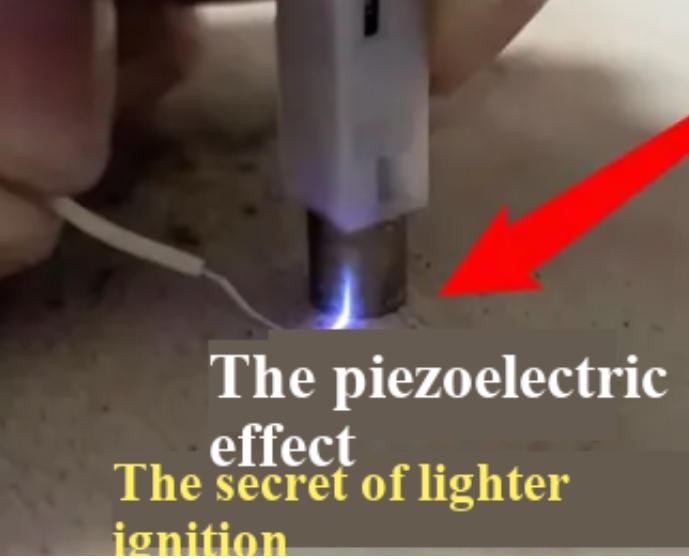
What is Piezoelectric Effect
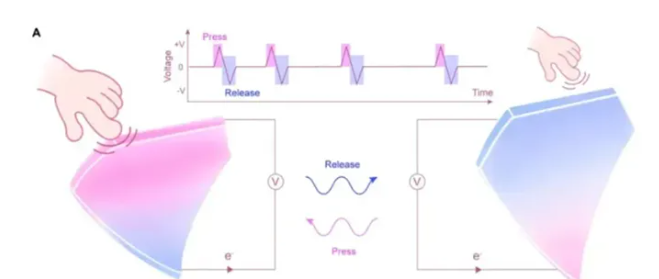
First discovered by the Curie brothers in 1880, the piezoelectric effect refers to the phenomenon where certain materials generate electric voltage under compression or tension. Conversely, slight physical deformation occurs when an electric current is applied. It realizes mutual conversion between mechanical and electrical energy.
A fundamental prerequisite for this effect is a non-centrosymmetric crystal structure, where positive and negative charge centers do not coincide. External force displaces these charges and produces macroscopic voltage. Perfectly symmetrical crystal structures cannot generate piezoelectric responses. This effect is widely applied in daily products including lighters, buzzers, medical ultrasonic probes and mobile phone filters.
Why Single-crystal Diamond Fails While Polycrystalline Film Works
Natural single-crystal diamond features a highly symmetrical face-centered cubic lattice formed by sp³ hybridized carbon atoms. Its perfectly overlapped positive and negative charge centers never shift under external force, resulting in zero piezoelectric voltage. This conclusion verified in 1929 has long been regarded as an undisputed academic consensus.
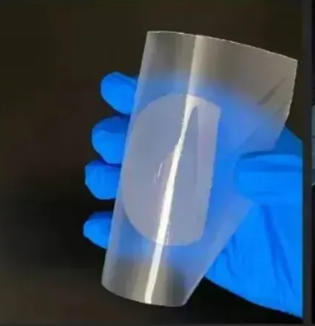
The research team broke this limitation by introducing structural defects. Composed of numerous tiny interlocking grains, polycrystalline diamond films contain abundant grain boundaries that disrupt original symmetry. Theoretical calculations prove bending deformation triggers local asymmetric polarization at grain boundaries, producing measurable piezoelectric responses.
Test results show its piezoelectric voltage constant reaches 82.2 mV·m/N, outperforming many conventional piezoelectric materials.
Broad Application Prospects
Diamond boasts supreme hardness, ultrahigh thermal conductivity, fast acoustic velocity, wide band gap, outstanding chemical stability and favorable biocompatibility. It was previously lacking piezoelectricity, a key functional property.
This breakthrough completes diamond's comprehensive performance, creating an all-round advanced material adaptable to extreme environments such as deep sea, outer space and human organisms. It enables simultaneous energy harvesting, precision sensing and high-frequency actuation.
Promising applications cover multiple fields:
- Self-powered medical implants: Intelligent cardiac stents and blood glucose monitors can run steadily powered by human kinetic energy, avoiding repeated replacement surgery.
- Extreme-condition sensors: Diamond sensors operate reliably inside aircraft engines, corrosive pipelines and nuclear reactors for real-time monitoring.
- Flexible health patches: Bendable diamond films attach closely to human skin to detect subtle physiological signals and support long-term low-power health tracking.
- Next-generation communication and quantum devices: Combined with piezoelectric performance, diamond facilitates high-performance resonators for 5G and 6G networks, and serves as core components in acoustic quantum information systems.
Send Inquiry