

The Report Global Geographical Distribution Analysis Of The Industrial Diamond Industry
Jun 28, 2026
Leave a message
Global Geographical Distribution Analysis of the Industrial Diamond Industry
Diamond, the hardest natural material with the highest thermal conductivity, is rapidly evolving from traditional abrasive tools to high‑end applications such as semiconductor thermal management and advanced electronic devices. This report maps the global industrial diamond landscape, analyzes spatial clustering logic, and outlines future trends.
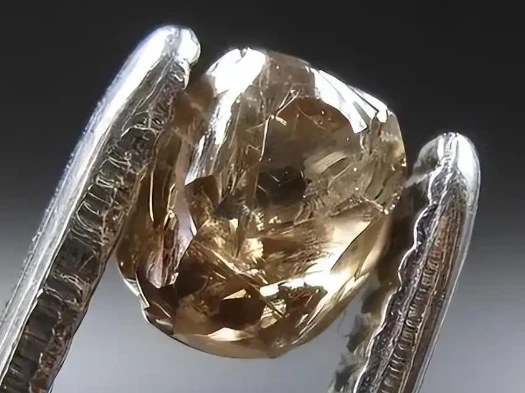
(Jewelry grade synthetic diamond)
I. China's Industrial Diamond Landscape
Central Core – Henan: The birthplace and largest production base of China's diamond industry (first synthetic diamond in Zhengzhou, 1963). It accounts for >90% of China's industrial diamond output and ~80% of cultivated diamond supply.
The "Zheng-Nan-Shang-Xu" superhard materials cluster dominates nationally, with over 95% global market share in six‑anvil presses.
Zhengzhou: Industrial hub hosting 300+ firms; Sifangda operates an 800‑unit MPCVD super factory (2M carats/year CVD diamond).
Xuchang (Changge): Home to Huanghe Whirlwind, building China's first 8‑inch diamond heat spreader line.
Shangqiu (Zhecheng): World's largest diamond micropowder base (Huifeng Diamond: >100M carats/month).
Nanyang (Fangcheng): Zhongnan Diamond leads in HPHT large single crystals (7B carats/year capacity).
Xinxiang (Yanjin): Focuses on HPHT large single crystals via industry–academia collaboration with Jilin University.
Western Energy Hubs – Inner Mongolia, Xinjiang, Gansu, Shanxi: CVD diamond production is energy‑intensive (electricity = 60–70% of cost). These regions offer low tariffs (¥0.26–0.35/kWh), cutting total costs by 20–40% versus coastal areas and providing green‑energy advantages under carbon neutrality goals.
Inner Mongolia: Hohhot hosts Huahe Jidian and Jingyuan Semiconductor; Baotou attracts Huifeng Diamond (500 MPCVD units) and full‑chain projects; Alxa and Taipusi Banner expand capacity.
Xinjiang: Hami, Shache, and Emin County develop large‑scale CVD bases tied to local wind/solar power.
Gansu: Jiuquan and Qingyang build integrated CVD parks covering equipment, crystal growth, and processing.
Shanxi: Taiyuan, Jincheng, and Changzhi leverage coalbed methane and power resources to attract projects.
Other Regions:
Northeast/North: Harbin (R&D spinoffs from HIT), Siping (Jilin), Dalian (natural diamond reserves = 54% of national total).
East China: Suzhou/Nanjing (precision machining, R&D); Ningbo (Saimo Tech: 1,800 MPCVD units, ~18% of global capacity); Hefei (chip cooling focus).
North China: Beijing (top research institutes + Wolde); Langfang (Wolde CVD lines); Chengde (Jingkai Tech, green‑power MPCVD).
South China: Dongguan Songshan Lake (8‑inch MPCVD, AI chip cooling demand).
Central China: Zhuzhou (largest southern base); Changsha (diamond wire saws); Wuhan (semiconductor industrial park).
Southwest/West: Yunnan Mile (2,000 MPCVD units planned); Guangxi Guilin/Hezhou (cultivated diamonds).
Coastal East: Shanghai (Zhengshi Tech); Xiamen (Huahe Jidian's HQ: R&D–Suzhou–Hohhot triad); Jiujiang (thermal spreader cluster).
II. Global Landscape & Strategies
United States – Application‑led, AI‑centric:
Akash Systems delivers diamond‑cooled NVIDIA H200 / AMD MI350X servers (GPU efficiency +15%), securing $300M orders.
Diamond Foundry advances direct wafer bonding to boost AI chip performance by ~5×.
Coherent supplies bondable diamond heat spreaders (up to 145 mm) for data centers and optical communications.
Europe – Research‑driven, subsidized:
Spain: €752M investment by SETI for diamond material bases.
France: Diamfab (CNRS spinoff) focuses on high‑voltage diamond power devices; HiQuTe Diamond explores quantum applications.
UK: Element Six (De Beers) leads in electronic‑grade CVD diamond and NV‑center films, partnering with IonQ on quantum materials.
Japan – Vertically integrated, specialty focus:
Ookuma Diamond Device builds the world's first volume diamond semiconductor fab (targeting full production by FY2028), applied in Fukushima nuclear waste handling.
Orbray commercializes 20×20 mm single‑crystal substrates, targeting 4‑inch wafers for 800V EV platforms.
Sumitomo develops GaN‑HEMTs on polycrystalline diamond for RF power devices and space communications.
III. Spatial Logic
Energy Cost Dominance: Electricity intensity drives relocation to low‑tariff western provinces; green power also mitigates carbon border risks.
Dual‑Carbon Policy Acceleration: Stricter emissions assessments, rising carbon prices (~¥58/t in 2024), and limited environmental capacity favor western expansion.
R&D–Manufacturing Separation: R&D and customization concentrate in eastern innovation hubs; energy‑intensive CVD scaling moves west (e.g., Bozhi Jinzuan: Suzhou HQ → Inner Mongolia fabs).
Path Dependence in Henan: Strong HPHT ecosystem but slower CVD transition due to legacy lock‑in.
Divergent Global Strategies:
- US: Application pull (AI cooling).
- Europe: Technology reserve (basic research, power/quantum devices).
- Japan: Full‑stack autonomy (materials → devices, nuclear/aerospace niches).
- China: Scale + upgrade (low cost, green power, policy support).
IV. Key Trends
- Accelerated Western Migration: By 2027, western provinces to account for >35% of national CVD capacity (vs. ~15% today). Eastern regions retain R&D/precision roles.
- Thermal Management Commercialization: AI chip power density drives rapid adoption; NVIDIA's Rubin/Feynman architectures standardize diamond‑composite + liquid cooling. Domestic leaders scale 8‑inch heat spreaders and CVD capacity.
- Domestic Semiconductor‑Grade Breakthroughs: Current import reliance: ~90% for CVD tools, <20% for ≥4″ single‑crystal heat spreaders. Xi'an Jiaotong University achieves volume 2‑inch wafers (purity 99.999%, κ=2000–2100 W/m·K, 30% cheaper than imports); Xinjiang Carbon‑based Core supplies stable 8‑inch polycrystalline wafers. Targets by 2028: domestic CVD equipment >50% share; ≥4″ spreaders >40% self‑sufficiency.
- Industry Consolidation: "Two giants (Zhongnan, Huanghe) + multiple specialists" structure; low‑margin micropowder segment (~15% GM) faces shakeout. Cost/technology leaders consolidate.
- Geopolitical Supply‑Chain Realignment: China's Nov‑2025 export controls on select diamonds/equipment (>US$270M exports in 2024) spur overseas reshoring/friend‑shoring (e.g., US CHIPS Act). China pivots upstream into high‑value devices and systems.
- Technology Roadmap: HPHT retains cost leadership for abrasives/gemstones; CVD dominates semiconductor applications. Size progression: polycrystalline 8″→12″; single‑crystal 2″→4–6″. Functionalization: NV‑center quantum sensors, nanotwinned diamond tools (+20% hardness).
V. Conclusion
The industry is transitioning from abrasives to strategic semiconductor materials. Spatial patterns reflect trade‑offs among energy cost, R&D access, and policy constraints. China commands global material supply but must evolve from "volume supplier" to "standard setter" and "device innovator." Capturing this geography is critical for investors, policymakers, and technology strategists.
Send Inquiry