

The Role of Iron Powder in Diamond Tools
Jul 30, 2026
Leave a message
The Role of Iron Powder in Diamond Tools
Iron powder is the base component used in the largest quantities and at the lowest cost within diamond tool matrix formulations. It is widely used in hot-pressed, sintered diamond tools-such as stone grinding blocks, concrete drilling bits, and saw blade segments-often in combination with copper, tin, cobalt, and nickel. Based on sintering mechanisms and production practices, its role can be categorized into three areas: advantages, drawbacks, and processing considerations.
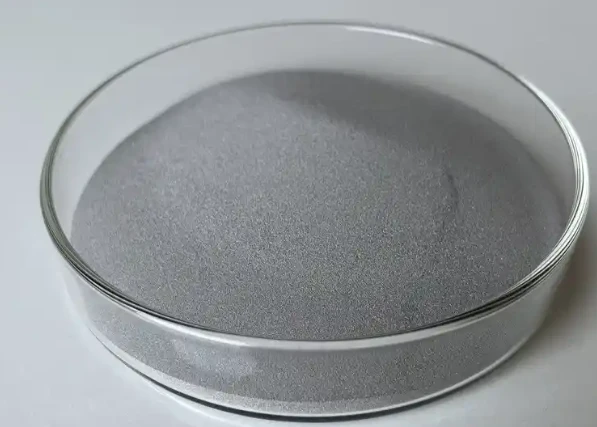
(Reduced Iron Powder)
I. Core Functions and Advantages
1 Reduces raw material costs and optimizes formulation economics
- Iron powder is significantly cheaper than cobalt or high-purity copper powders. As a primary filler material added in large quantities, it drastically lowers the cost of matrix raw materials, making it the most critical low-cost base ingredient for the mass production of diamond tools.
2 Regulates matrix hardness and wear resistance to suit different workpieces
Iron possesses moderate hardness; adding appropriate amounts enhances the matrix's wear resistance.
- High-iron formulations: Increased matrix wear resistance makes them suitable for processing granite, high-strength concrete, and hard, high-quartz substrates, thereby slowing matrix consumption and extending tool life.
- Reduced iron content: Results in a softer matrix with faster self-sharpening capabilities, making it suitable for softer materials like marble and luxury stones.
3 Improves sintering performance and promotes liquid-phase sintering
- Iron can form low-melting-point alloy phases with tin and copper. Within the standard hot-pressing sintering temperature range (760–830°C), it promotes metallurgical bonding between powder particles and increases matrix density. Irregularly shaped reduced iron powder offers superior mechanical interlocking compared to atomized iron powder, thereby enhancing the green body's forming strength.
4 Enhances mechanical retention of diamond particles
After sintering, the iron-based matrix exhibits excellent mechanical interlocking capabilities. With proper formulation, the matrix firmly encapsulates diamond particles, delaying premature diamond pull-out during grinding; retention is further improved when used with titanium-coated diamonds.
5 Adjusts matrix impact toughness
- Compared to pure copper-based matrices, the addition of iron increases toughness. This makes segments and grinding blocks less prone to brittle fracture or chipping when processing reinforced concrete or stone with uneven aggregate distribution.
II. Defects Associated with Iron Powder
Key Considerations for Formulation Design
1 Susceptibility to oxidation
- Iron powder oxidizes very easily; exposure to moisture or inadequate atmospheric protection during sintering leads to the formation of iron oxides. These oxides accumulate at grain boundaries, weakening the bonding between powder particles and causing voids or cracks within the matrix, which results in grit shedding and reduced matrix strength. Consequently, stricter measures are required to prevent oxidation during mixing, storage, and sintering.
2 Excessive frictional heat generation and risk of diamond thermal degradation
- Iron has moderate thermal conductivity, leading to high heat generation during grinding friction. Under continuous heavy-load processing, localized temperatures rise sharply, easily causing diamond graphitization and dulling. When processing soft luxury stones or light-colored marble, detached iron filings can oxidize to form rust spots, causing permanent yellow staining on the stone surface.
3 Excessive iron content leads to a brittle matrix and poor self-sharpening
- If the iron powder proportion is too high, the matrix becomes excessively hard and lacks self-sharpening capability. After prolonged grinding, the matrix surface becomes polished; diamonds fail to expose new cutting edges, resulting in slippage and sluggish cutting performance.
4 Significant impact of particle size and morphology on processing characteristics
- Coarse spherical atomized iron powder offers good flowability but exhibits poor compactibility and low sintering activity. Fine reduced iron powder offers high sintering activity and good compactibility but suffers from poor flowability and uneven powder distribution, which can lead to weight inconsistencies in the grinding segments.
III. Practical Selection and Proportioning Guidelines for Production
- Reduced iron powder: Porous, irregularly shaped particles with high sintering activity; the mainstream choice for stone grinding segments in China.
- Atomized iron powder: Spherical particles with excellent flowability; suitable for fully automated, continuous molding production, though sintering activity is relatively low.
- Application scenarios:
- Metal-bonded grinding segments for granite and general-purpose concrete drill bits: Formulations with medium-to-high iron content, balancing wear resistance and cost.
- Soft-matrix grinding segments for marble and luxury stone: Reduced iron powder proportion and increased copper content to minimize rust risks and enhance self-sharpening.
- High-impact drill teeth for pile foundations: Moderately reduced iron content with increased cobalt and nickel to improve toughness and prevent tooth chipping.

(Diamond Drill Bits Segment)
Brief Summary
The core value of iron powder lies in its ability to form the matrix framework at low cost while regulating wear resistance and sintering density.
Its advantages include high cost-effectiveness, moderate wear resistance, and decent toughness; its drawbacks are a tendency to oxidize and cause rust contamination, as well as the risk of matrix glazing and slipping if used in excess. Formulation engineers balance cutting sharpness, service life, and production costs by adjusting iron powder content and particle size-often in combination with copper, tin, cobalt, and nickel systems-to suit the specific operating conditions for stone or concrete applications.
Send Inquiry